

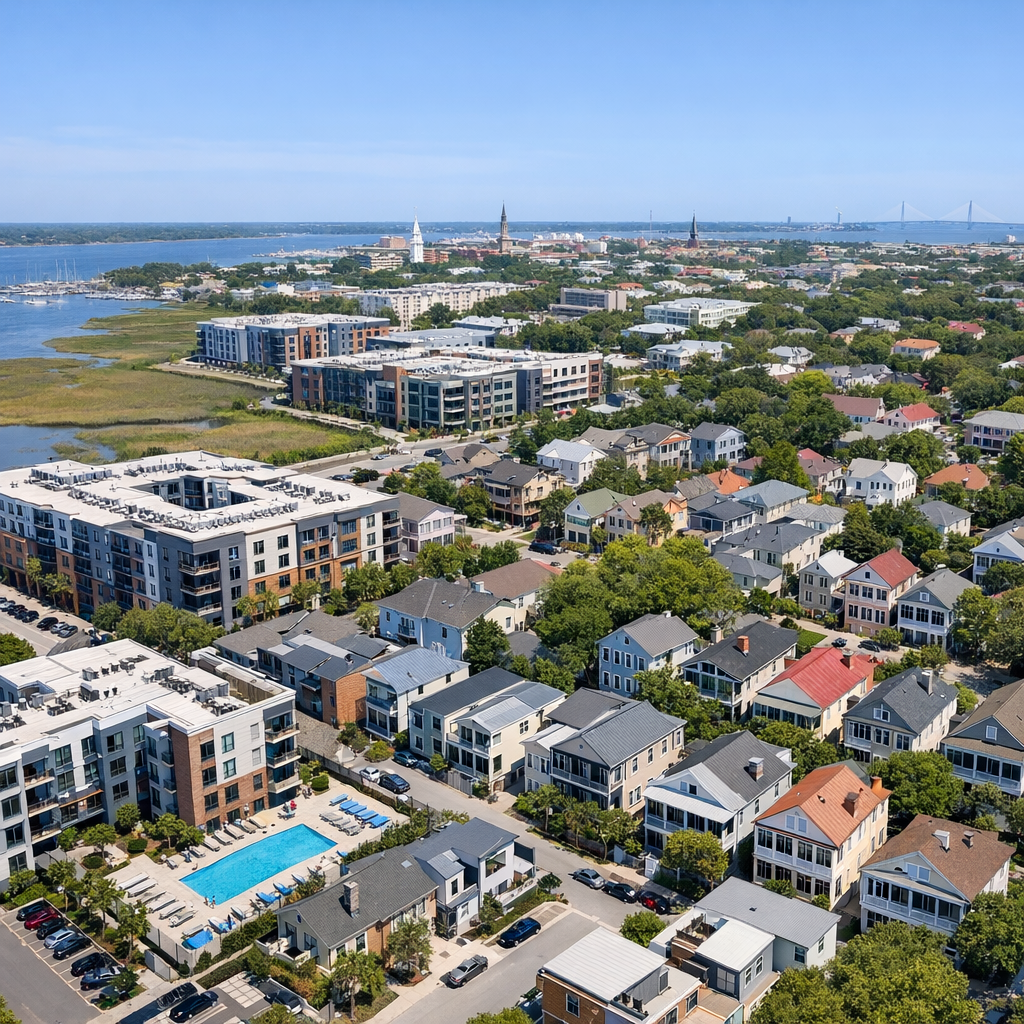
Charleston’s real estate market continues to evolve, reflecting a dynamic interplay between rising property values, increased inventory, and concerted efforts to expand affordable housing options.
Market Trends and Property Values
As of early 2026, the Charleston metro area’s median home price stands at approximately $430,000, marking a year-over-year appreciation of about 4–5%. This steady growth indicates a shift from the rapid double-digit increases observed in previous years, suggesting a more balanced market. Notably, the median sale price per square foot in Charleston is $353, up 2.8% since last year.
Inventory levels have also seen changes. The Charleston Tri-County area has experienced an increase in listings, providing buyers with more options. However, desirable neighborhoods and price points, particularly under $500,000, remain competitive.
Affordable Housing Initiatives
Addressing housing affordability remains a priority for Charleston. In January 2026, the city celebrated the completion of four new affordable rental homes at 89 Fishburne Street. This project, a collaboration between the City of Charleston and the Charleston Redevelopment Corporation (CRC), exemplifies successful public-private partnerships aimed at increasing affordable housing stock.
Furthering these efforts, the Housing Our Future Trust Fund, established by Charleston County and the South Carolina Community Loan Fund, has allocated $4.8 million to four projects set to produce nearly 200 affordable housing units. These initiatives encompass both rental and homeownership opportunities, reflecting a comprehensive approach to housing affordability.
New Developments and Community Growth
Several new developments are contributing to Charleston’s growth. The Goddard at Point Hope, a 227-unit apartment community developed by Woodfield Development, offers modern living within a master-planned community. Amenities include retail spaces, a swimming pool, and a dog park, catering to diverse resident needs.
Additionally, Armada Development is actively involved in creating multifamily developments across various budgets, from affordable housing to luxury townhomes, further diversifying Charleston’s housing landscape.
Conclusion
Charleston’s real estate market is characterized by steady growth, increased inventory, and proactive measures to enhance housing affordability. For residents and potential buyers, staying informed about these trends and developments is essential for making well-informed decisions in this dynamic market.