

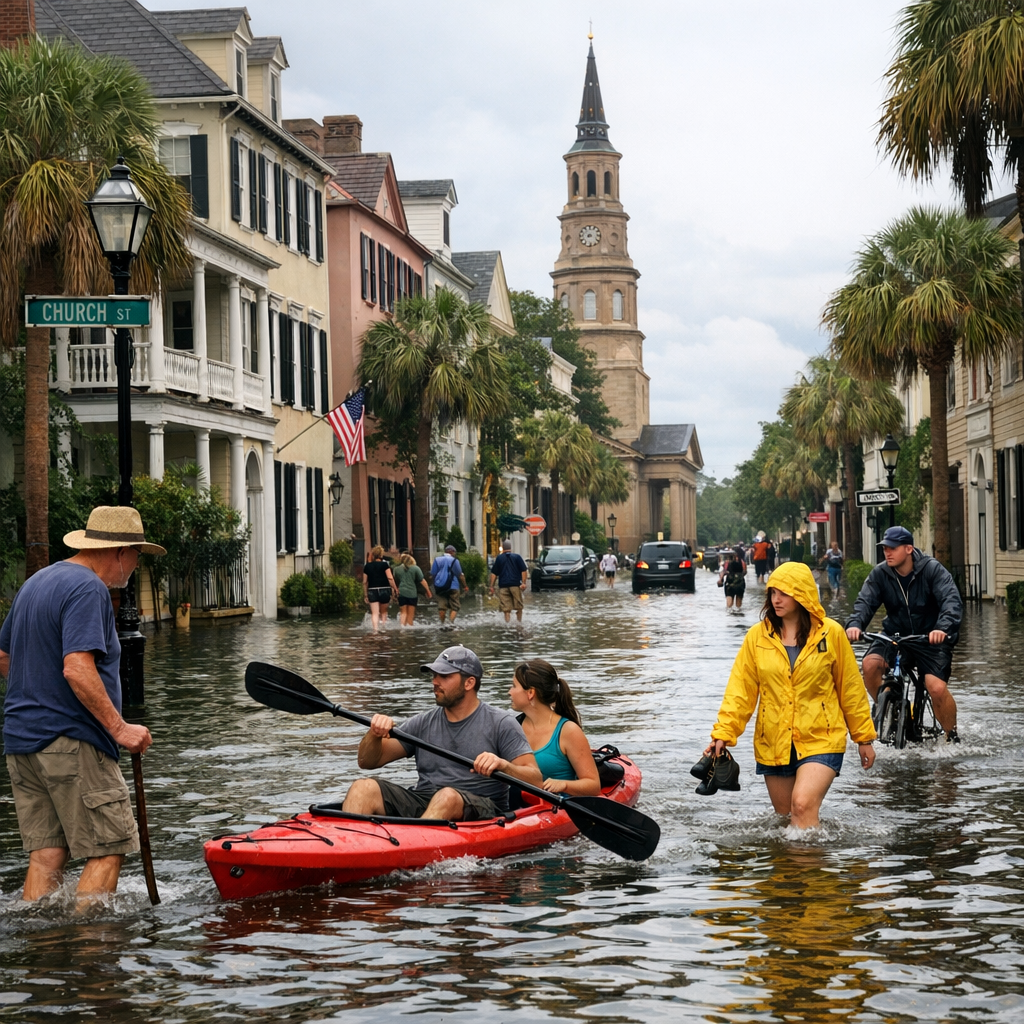
Charleston, South Carolina, renowned for its historic charm and coastal beauty, continues to grapple with persistent flooding issues. The city’s low-lying geography, combined with rising sea levels and frequent storms, has led to increased instances of inundation, affecting residents and infrastructure alike.
Community Concerns and Initiatives
Residents have voiced growing concerns over the impact of flooding on daily life. The Rosemont neighborhood, a historic African American community, has been particularly affected. Herbert Maybank, a longtime resident, recalls a time when Rosemont was a self-sufficient community. “It was a place where everyone knew each other. Where people watched each other’s kids. All of that has changed,” he says. The area now faces challenges from extreme weather events, rising sea levels, and infrastructure failures. Source
In response, local organizations have stepped up. The Sustainability Institute of South Carolina, in partnership with AmeriCorps, is working to develop the next generation of conservationists to address these pressing environmental issues. Their efforts aim to empower communities like Rosemont to build resilience against the challenges posed by climate change. Source
City-Led Efforts and Future Plans
The City of Charleston has recognized the urgency of the situation and is taking steps to address it. The Charleston Water Plan, inspired by the Dutch Dialogues Charleston, is a comprehensive examination of the city’s relationship with water and the threats it poses. This plan serves as an aspirational vision for the city to embrace solutions to the risks from sea level rise, high tides, storm surge, stormwater, and groundwater. Source
Additionally, the Peninsula Perimeter Protection Project, initiated by the U.S. Army Corps of Engineers, aims to protect the Charleston peninsula from flood risks associated with sea level rise, high tides, and storm surges. This project is part of a broader effort to implement infrastructure solutions that can withstand the challenges posed by a changing climate. Source
Looking Ahead
While these initiatives represent significant strides toward mitigating flooding in Charleston, the path forward requires continued collaboration between city officials, community organizations, and residents. By combining infrastructure improvements with community-driven solutions, Charleston aims to preserve its historic character while building resilience against future flooding events.