

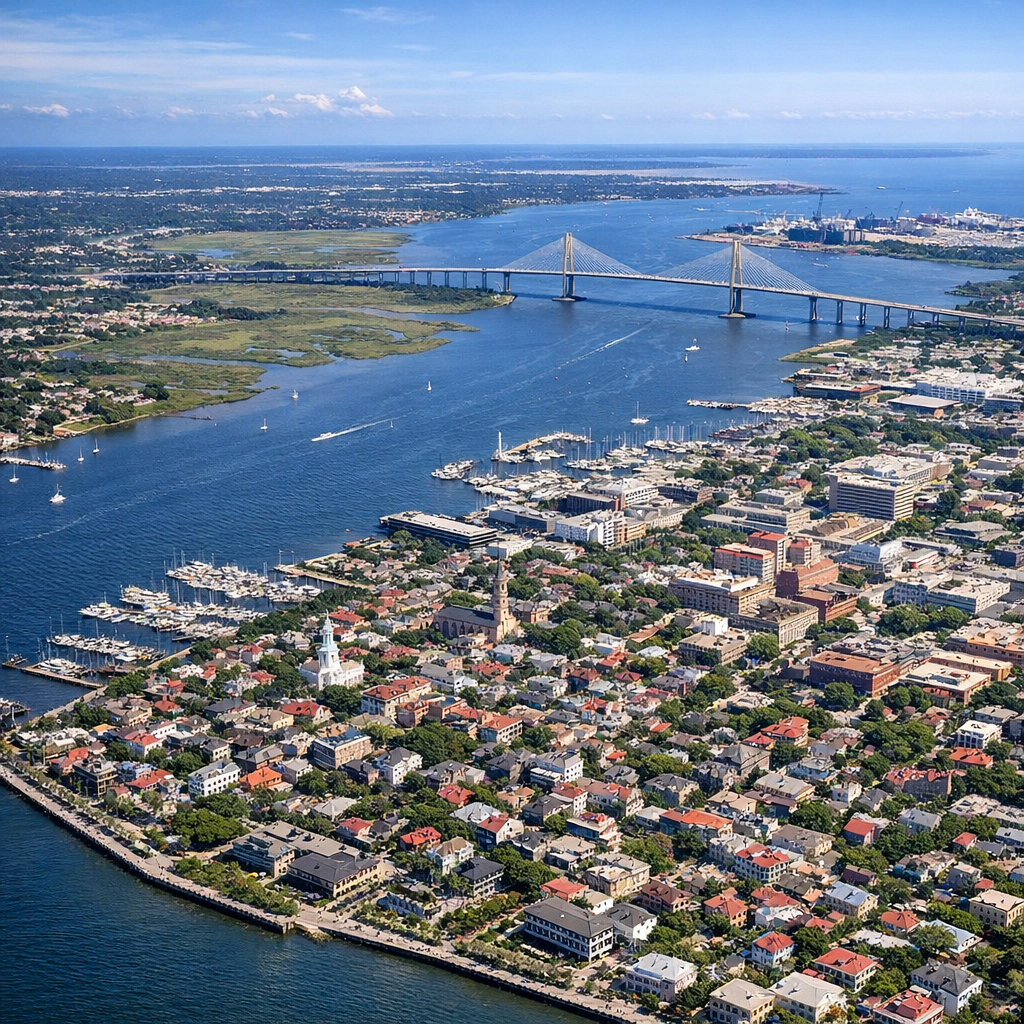
Charleston is experiencing significant transformations across various sectors, reflecting our city’s commitment to progress and resilience. Here’s a look at some pivotal developments:
Advancements in Flood Mitigation
In a proactive move to address persistent flooding, the city has applied for $4.6 million through the South Carolina Office of Resilience Voluntary Buyout Program. This funding aims to acquire properties in flood-prone areas, converting them into rain gardens and retention ponds to enhance stormwater management. This initiative underscores Charleston’s dedication to sustainable solutions for longstanding environmental challenges.
Enhancing Affordable Housing
To tackle the pressing need for affordable housing, the Charleston City Council has approved the creation of a new workforce housing district. This zoning classification mandates that at least half of the housing units built within the district remain permanently affordable. The city has set an ambitious goal of adding 3,500 new housing units by 2032, demonstrating a strong commitment to housing accessibility for all residents.
Addressing Water Quality Concerns
Water quality has emerged as a critical issue, particularly in areas like Filbin Creek in North Charleston, identified as one of the most polluted waterways in South Carolina. Elevated bacteria levels pose risks to both public health and the environment. In response, Charleston Water System has reached an agreement to address ongoing sanitary sewage overflow problems in West Ashley, aiming to mitigate contamination and improve water quality.
Transportation and Infrastructure Initiatives
Efforts to improve transportation infrastructure are underway, with the city implementing AI-enabled traffic signal technology along the Calhoun Street corridor. Supported by the U.S. Department of Transportation’s SMART Grant program, this project aims to enhance traffic flow and safety on one of the peninsula’s busiest streets. Additionally, discussions are ongoing regarding potential regulations for electric bicycles (e-bikes) to ensure safe integration into the city’s transportation network.
Community Engagement and Environmental Stewardship
Community involvement remains vital in shaping Charleston’s future. Conservation groups are actively challenging zoning exemptions for projects like the proposed sand mine in McClellanville, emphasizing the importance of environmental preservation and public participation in development decisions.
As Charleston continues to evolve, these initiatives reflect a collective effort to balance growth with sustainability, ensuring a vibrant and resilient community for generations to come.