

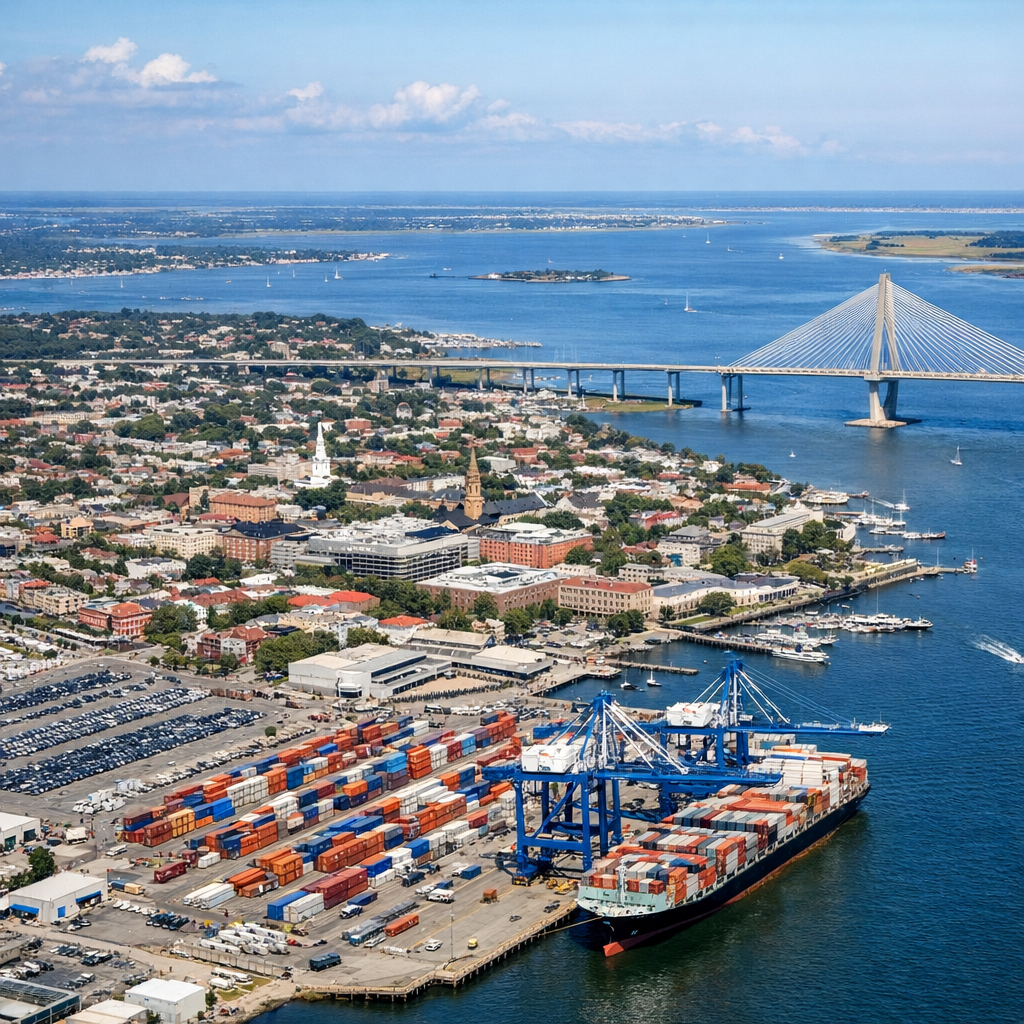
Charleston, South Carolina, boasts a diverse economy encompassing tourism, aerospace, information technology, and a significant military presence. National economic policies play a pivotal role in shaping these sectors, influencing local employment, infrastructure, and overall economic growth.
Military Installations and Economic Impact
Charleston is home to several key military installations, including Joint Base Charleston and the Naval Information Warfare Center (NIWC) Atlantic. These facilities contribute substantially to the local economy. For instance, a 2025 study highlighted that NIWC Atlantic had an economic impact of $10 billion nationwide, with $2.1 billion benefiting South Carolina directly. This includes supporting over 41,000 jobs and generating $3.8 billion in labor income. Such figures underscore the importance of federal defense budgets and policies in sustaining local employment and economic stability.
Aerospace Industry Growth
The aerospace sector, notably Boeing’s assembly plant in North Charleston, has been a significant driver of economic growth. Since its opening in 2011, the plant has bolstered the state’s aerospace industry, leading to increased employment and wage growth. National policies affecting trade, tariffs, and defense spending directly impact this sector’s health and expansion.
Infrastructure Investments
Federal infrastructure policies have facilitated substantial investments in Charleston’s transportation and port facilities. The South Carolina Ports Authority, managing the Port of Charleston, has seen significant growth, with a 2023 study reporting $87 billion in annual economic activity and supporting 260,000 jobs statewide. Continued federal support for infrastructure projects is crucial for maintaining and enhancing these economic benefits.
Resilience and Preparedness
Charleston’s coastal location makes it vulnerable to natural disasters. Federal funding for disaster resilience and preparedness has proven economically beneficial. A 2025 report indicated that every dollar invested in resilience yields over $16 in reduced economic costs, highlighting the importance of sustained federal investment in disaster preparedness.
Conclusion
National economic policies significantly influence Charleston’s economic landscape. Continued federal support in defense, infrastructure, and disaster preparedness is essential for sustaining and enhancing the region’s economic vitality.